

At Vitality ReGen Aesthetics in Arkadelphia, AR, we’re seeing more patients ask for results that feel natural—healthier hair, calmer skin, fewer lines, and less day-to-day discomfort—without downtime or harsh recovery. One of the most versatile, evidence-supported ways to support those goals is LLLT, also called photobiomodulation (PBM).
In plain terms: LLLT uses specific wavelengths of blue, red, and near-infrared light to stimulate cellular energy and tissue repair signals—without heat, needles, or peeling. When delivered with a medical-grade platform like the Celluma ELITE, it can be used to support:
- Hair rejuvenation (thinning, shedding, early hair loss support)
- Pain relief (muscle/joint discomfort, inflammation support)
- Wrinkle relaxing + skin rejuvenation (fine lines, texture, tone)
- Skin conditions (especially acne support; select inflammatory concerns)
Celluma describes its clinically used wavelengths as blue ~465 nm, red ~640 nm, and near-infrared ~880 nm, selected for acne, skin support, and pain/inflammation applications.
What is LLLT (Photobiomodulation)?
LLLT is a non-thermal light therapy that delivers targeted wavelengths to the skin and superficial tissues to influence cell signaling. Dermatology literature commonly defines PBM as use of red (about 620–700 nm) and near-infrared (about 700–1440 nm) light delivered via lasers or LEDs, with expanding clinical use in dermatology settings. JAAD+1
How it works (without the physics lecture)
Most benefits trace back to a few biologic themes:
- Mitochondrial support (cell “energy”): PBM can influence cellular respiration and ATP production (fuel for repair processes). JAAD+1
- Inflammation modulation: Helpful when inflammation is contributing to pain, acne activity, or skin sensitivity. Springer Link+1
- Microcirculation support: Better local circulation can support tissue recovery and scalp health; Celluma also positions its modes around circulation and inflammation support. Atlanta Hyperbaric Center+1
Why we feature the Celluma ELITE at Vitality ReGen Aesthetics
Not all “red light” devices are built the same. Power density, wavelength accuracy, treatment geometry, and protocols matter.
Celluma ELITE (Series 2) is marketed as an FDA-cleared professional platform with multiple treatment modes (including aging skin, acne, pain, and hair growth—and on the Series 2 platform, additional indications such as contouring). Celluma+1
Celluma’s professional materials also emphasize its core wavelength approach (blue/red/NIR) and protocol-based programming. Celluma+1
From a patient standpoint, what matters most is that it’s:
- Non-invasive
- Comfortable
- No downtime
- Consistent, protocol-driven sessions (this is where results are made)
Benefit 1: LLLT for Hair Rejuvenation (Thinning Hair Support)
Hair loss is rarely just one thing. Genetics, hormones, stress, postpartum shifts, nutrition, inflammation, and styling practices can all play roles. LLLT is best viewed as a follicle-supportive therapy—not an overnight miracle, and not a replacement for medical evaluation when needed.
What the research shows
A notable randomized, double-blind, sham-controlled trial (16 weeks) reported that the active LLLT group increased hair density by ~41.9 hairs/cm² and hair thickness by ~7.5 μm, while the control group showed minimal change; no adverse events were reported in that study. PMC
Dermatology reviews also describe PBM as a potentially effective and safe option for certain hair loss patterns, especially when used consistently and sometimes alongside standard therapies. Wiley Online Library+1
Who tends to be a good candidate?
LLLT for hair rejuvenation is typically best for:
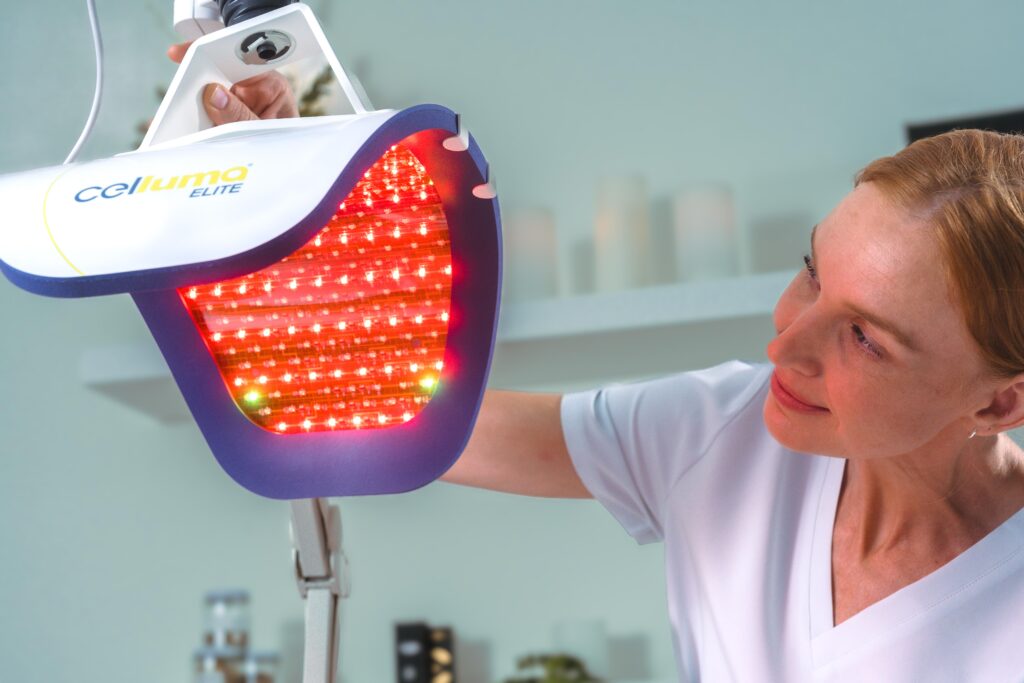
- Early androgenetic alopecia (pattern thinning)
- Diffuse thinning where follicles are still active
- Patients who want a non-pharmaceutical support option
- Patients using topicals/orals who want an adjunct (when appropriate)
Not ideal when follicles are no longer viable (advanced long-standing loss) or when scarring alopecia is present—those deserve prompt medical evaluation.
What a “realistic” timeline looks like
Hair cycles move slowly. Most people need:
- Consistent sessions for 8–16+ weeks before judging response
- Ongoing maintenance to sustain gains (think “gym for follicles”)
At Vitality ReGen Aesthetics, we often pair hair-focused LLLT with scalp-care strategies and can discuss whether you should also consider medical hair-loss evaluation, labs, or combination approaches.
Benefit 2: LLLT for Pain Relief and Recovery Support
LLLT is widely used as a drug-free adjunct for musculoskeletal discomfort—especially when inflammation and circulation issues are contributing.
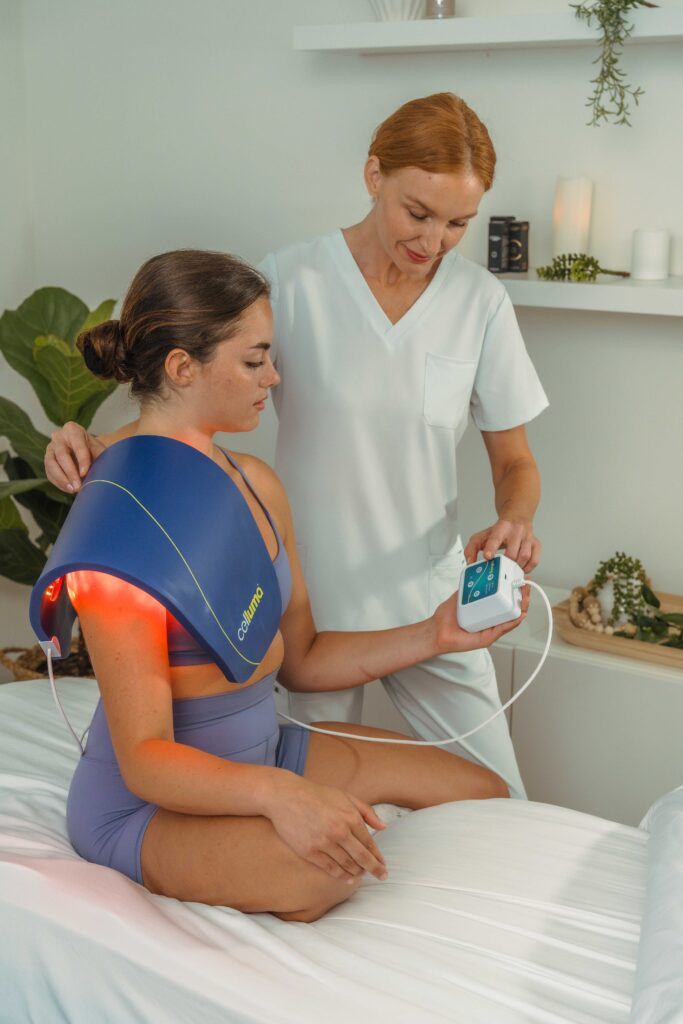
A clinical review in Current Rheumatology Reports discussed low-level laser therapy as a non-pharmacologic approach in pain management contexts and summarized clinical considerations for acute pain applications. Springer Link
Sports/rehab literature also continues to examine PBM for recovery and inflammation modulation with generally favorable safety when properly used. MDPI
Common concerns patients use it for
- Neck/shoulder tension
- Low back tightness
- Joint aches (including mild arthritis-type discomfort)
- Post-workout soreness / recovery support
Celluma’s user documentation describes its aches/pains mode for temporary relief of minor muscle and joint pain, stiffness, minor arthritis pain, muscle spasms, and to temporarily increase local blood circulation, with a commonly referenced protocol of 12 sessions over 4 weeks (3/week). Atlanta Hyperbaric Center
What it feels like
Most patients describe it as relaxing—warmth without heat, no zapping, no downtime. Many schedule sessions like they would massage or stretching therapy.
Benefit 3: “Wrinkle Relaxing” and Skin Rejuvenation (Fine Lines, Texture, Glow)
When patients say they want “wrinkle relaxing,” they often mean:
- Softer fine lines
- Better skin texture
- More even tone
- Healthier-looking “bounce”
PBM is not the same as neuromodulators (like Botox) that relax facial muscles. Instead, light therapy supports collagen/elastin signaling and inflammation reduction, which can make fine lines appear softer and skin look more rested over time.
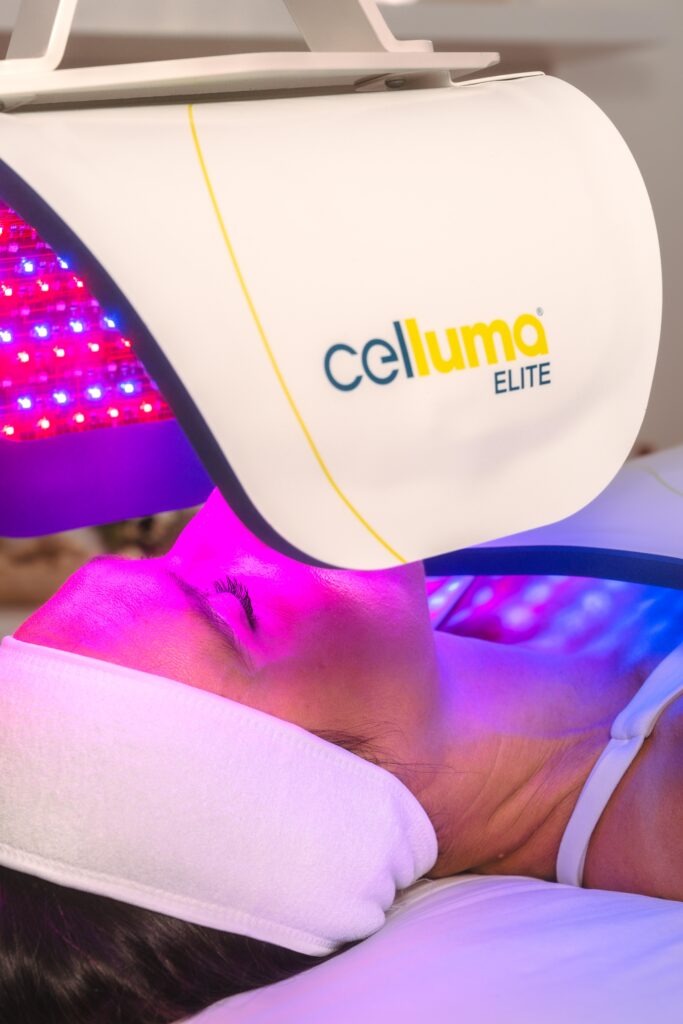
A classic clinical study using 633 nm and 830 nm LED concluded this approach was effective and well-tolerated for skin rejuvenation without thermal injury. ScienceDirect
A broader aesthetic safety-focused review also summarizes PBM’s growing use in skin rejuvenation and evaluates oncologic safety considerations in the aesthetic context. OUP Academic
Best-fit concerns
- Early fine lines
- Dullness
- Mild texture irregularity
- Post-procedure calming support (depending on procedure timing)
Even better in combination
In practice, LLLT often shines as a supportive add-on:
- After facials (calming)
- With microneedling plans (recovery support)
- With injectables skincare routines (to support overall skin quality)
Benefit 4: LLLT for Skin Conditions (Acne + Inflammation Support)
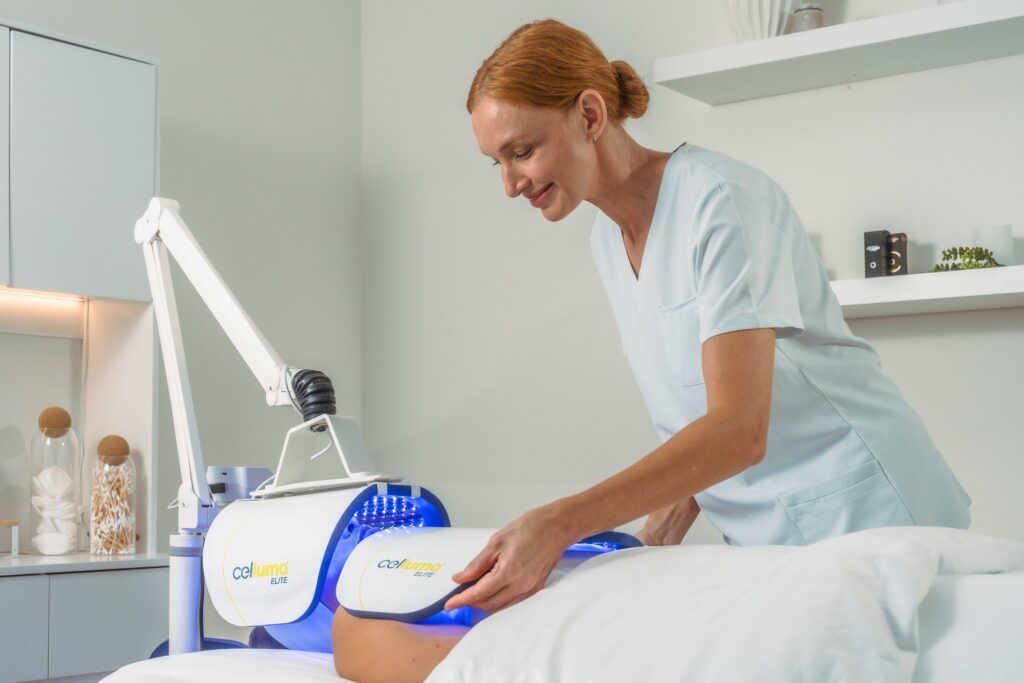
This is where wavelength selection matters. Blue and red light combinations are commonly used for acne support.
A recent publication in JAMA Dermatology notes that systematic review data found red and blue LED devices improved mild-to-moderate acne lesions, and supported combined red/blue LED as an adjunctive option. JAMA Network
Celluma’s own treatment protocol page describes acne mode as blue-light dominant with red light included to reduce inflammation and promote tissue repair, often used 2–3x/week for ~4 weeks depending on severity. Celluma+1
Acne-related goals we commonly target
- Fewer inflamed breakouts
- Less redness around active lesions
- Calmer skin during acne treatment plans
- Support for post-acne healing routines (not a scar “eraser,” but supportive)
Other inflammatory skin concerns
Dermatology education resources describe expanding PBM use across multiple dermatologic applications, but the strength of evidence varies by condition and protocol. JAAD+1
If you have eczema/psoriasis-like symptoms, we’ll discuss whether LLLT is appropriate as supportive care and when a dermatology diagnosis is important.
What a Celluma ELITE session looks like in Arkadelphia, AR
Most Celluma programs run about 30 minutes per session per manufacturer documentation. Atlanta Hyperbaric Center+1
Typical plans are built around consistency—often 2–3 sessions weekly early on, then tapering to maintenance depending on your goal. Celluma+1
Before your visit
- Arrive with clean skin/scalp (makeup can reduce light penetration per Celluma instructions). Atlanta Hyperbaric Center
- Tell us about:
- Light sensitivity disorders
- Current medications (especially photosensitizers)
- Recent isotretinoin use
- Pregnancy or breastfeeding status (we’ll use conservative guidance)
After your visit
- No downtime.
- Most people return to normal activities immediately.
Safety, side effects, and who should avoid LLLT
When properly used, PBM/LLLT is generally well tolerated with a low side-effect profile in dermatology settings. JAAD+1
Potential issues are usually mild:
- Temporary redness or warmth
- Eye discomfort if eye protection isn’t used (we use appropriate protection)
We’ll advise caution or avoidance if you:
- Have a known photosensitivity disorder
- Use strongly photosensitizing medications (case-by-case)
- Have suspicious or changing lesions that need medical evaluation first
Frequently Asked Questions
1) What does LLLT stand for?
LLLT stands for low-level light therapy, also called photobiomodulation, using specific wavelengths to support cellular repair and reduce inflammation. JAAD
2) How long does it take to see results from LLLT for hair?
Most people should plan on 8–16 weeks of consistent sessions before judging hair changes, because hair growth cycles are slow. PMC
3) Can LLLT regrow hair?
Research shows it can increase hair density and thickness in certain patients with androgenetic alopecia when used consistently. One sham-controlled trial reported an average increase of ~41.9 hairs/cm² at 16 weeks. PMC
4) Does Celluma ELITE help with pain?
Celluma’s documentation describes its aches/pains mode for temporary relief of minor muscle/joint pain and stiffness and to temporarily increase local blood circulation, typically in structured protocols. Atlanta Hyperbaric Center+1
5) Is LLLT the same as Botox for wrinkles?
No. Botox relaxes facial muscles. LLLT supports skin quality (texture, inflammation, collagen signaling) and may soften the look of fine lines over time. ScienceDirect+1
6) Can LLLT help acne?
Yes, evidence supports blue + red LED as an adjunct for mild-to-moderate acne, and Celluma’s acne mode is designed around that wavelength strategy. JAMA Network+1
7) How often should I do Celluma ELITE treatments?
Common protocols use 2–3 sessions per week, with many manufacturer protocols describing 12 sessions over ~4 weeks for certain concerns. Atlanta Hyperbaric Center+1
8) Is red light therapy safe for all skin tones?
In general, PBM is considered non-thermal and commonly used across skin types, but device choice and parameters matter. We tailor recommendations to your skin history and sensitivities. JAAD+1
9) Can I combine LLLT with other treatments?
Often yes. Many patients pair LLLT with skincare regimens, injectables, or hair restoration plans. We’ll guide timing and sequencing based on your goals.
Why local patients choose Vitality ReGen Aesthetics for LLLT in Arkadelphia
You can buy “red light” online—but outcomes are usually better when:
- The device is professional-grade and protocol-driven
- Treatments are consistent
- A medical-aesthetics team helps you match therapy to a real diagnosis and goal
That’s exactly how we use Celluma ELITE at Vitality ReGen Aesthetics in Arkadelphia, AR—as a clinically grounded, low-downtime way to support hair, skin, and comfort.
Reserve Your Session
If you’re ready to explore LLLT for hair rejuvenation, pain relief, wrinkle relaxing, or acne/skin support, schedule a consultation at Vitality ReGen Aesthetics (Arkadelphia, AR). We’ll review your goals, recommend a treatment plan, and map out a realistic timeline—so you know exactly what to expect.